Inspiration
How to Use Pinterest for Dress Inspiration Without Copying a Design Exactly
Popoola Mutiat
14 October 2026
You've saved a dress with beautiful sleeves.
Then another with a neckline you love. A third has the kind of fitted bodice you've been imagining, while a fourth has a skirt that falls exactly the way you like.
You save all four.
Then you look at your Pinterest board and realise you have several dresses you love, but no single design that brings everything together.
If you've ever found yourself in this situation, you're not alone. Pinterest is wonderful for discovering ideas, but collecting inspiration and deciding what you actually want to wear are two different things.
When you're commissioning a bespoke dress, the goal isn't necessarily to find one picture and have it reproduced exactly. It's to understand what attracts you to those pictures, communicate those preferences clearly, and work with your designer to develop a dress that makes sense for you.
Here's how to approach that process.
1. Stop looking for the perfect dress. Start noticing what you like.
It's tempting to keep scrolling until you find one picture that feels like the answer.
Sometimes you do. But often, your preferences are spread across several different designs.
You may like the neckline of one dress, the sleeves of another, the way a third fits through the waist, and the overall simplicity of a fourth.
That doesn't mean you are confused or that your ideas don't go together. It means you're responding to different design details.
The first useful step is to look through your saved pictures and ask yourself a simple question:
What exactly do I like about this dress?
Try to be more specific than saying you love the whole look.
Perhaps it's the way the neckline frames the upper body. Perhaps the sleeves give the dress its character. Maybe you like the long, uninterrupted line of the skirt, the way the fabric moves, or the balance between a fitted top and a fuller bottom.
You don't need to know the technical names for these features. Describing what catches your attention is enough to begin.
Once you start identifying those details, your Pinterest board becomes more useful. Instead of a collection of beautiful dresses, it becomes a collection of clues about your preferences.
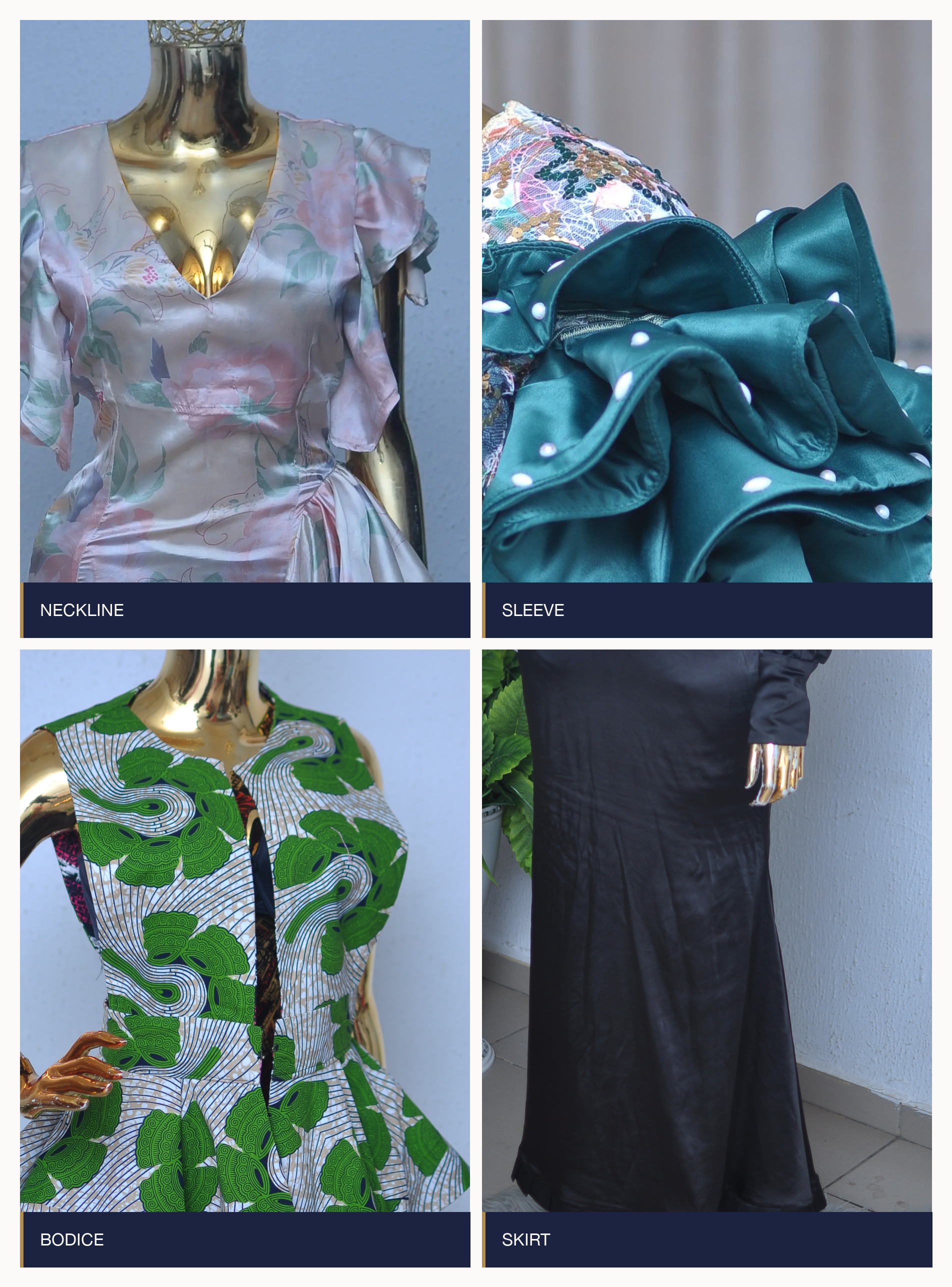
A reference picture can help you identify one particular detail you love, even when you wouldn't choose the entire dress.
2. Build your board around ideas, not just occasions
Many people organise their Pinterest boards around events: wedding guest dresses, owambe styles, evening wear or birthday outfits.
That is a good starting point because the occasion influences what you might want to wear. But when you're preparing to commission a dress, it can also help to organise your inspiration around design preferences.
For example, you might have a collection of pictures featuring interesting sleeves. Another might contain dresses with clean necklines and simple silhouettes. You may notice that you repeatedly save dresses with sculptural details, soft draping, defined waists or relatively understated skirts.
These patterns can tell you something about the designs you naturally gravitate towards.
You don't have to create a separate board for every preference. You can use sections within a board or simply review the pictures you've already saved.
The important thing is to make the collection easier to interpret.
If you are preparing for a particular occasion, keep that context in mind too. A dress you admire for a formal evening event might inspire one detail, while another picture might better communicate the level of comfort or freedom of movement you want.
Your references don't all have to show dresses intended for the same occasion. They just need to help explain the direction you're considering.
3. Separate what you love from what you would change
This is one of the most useful things you can do before speaking with a bespoke designer.
When you look at a reference picture, don't ask only whether you like it. Ask whether there is anything you would change if the dress were being made for you.
You might love a dress's sleeves but prefer a different neckline. You might like the silhouette but want the skirt to be less voluminous. You could admire the embellishment while preferring a simpler finish.
You might even love how a dress looks but know that you wouldn't feel comfortable wearing it exactly as shown.
All of that information is valuable.
Consider a dress with large statement sleeves, a fitted bodice and a long skirt. You may love the sleeves because they make the design distinctive, but find the rest of the dress more elaborate than your personal style.
That gives you a clearer direction: the sleeves are important, while the rest of the design may need to be quieter.
You have moved from saying, "I want this dress," to explaining, "I like this particular feature, but I want the overall design to feel more like me."
That is a much more useful starting point for a design conversation.

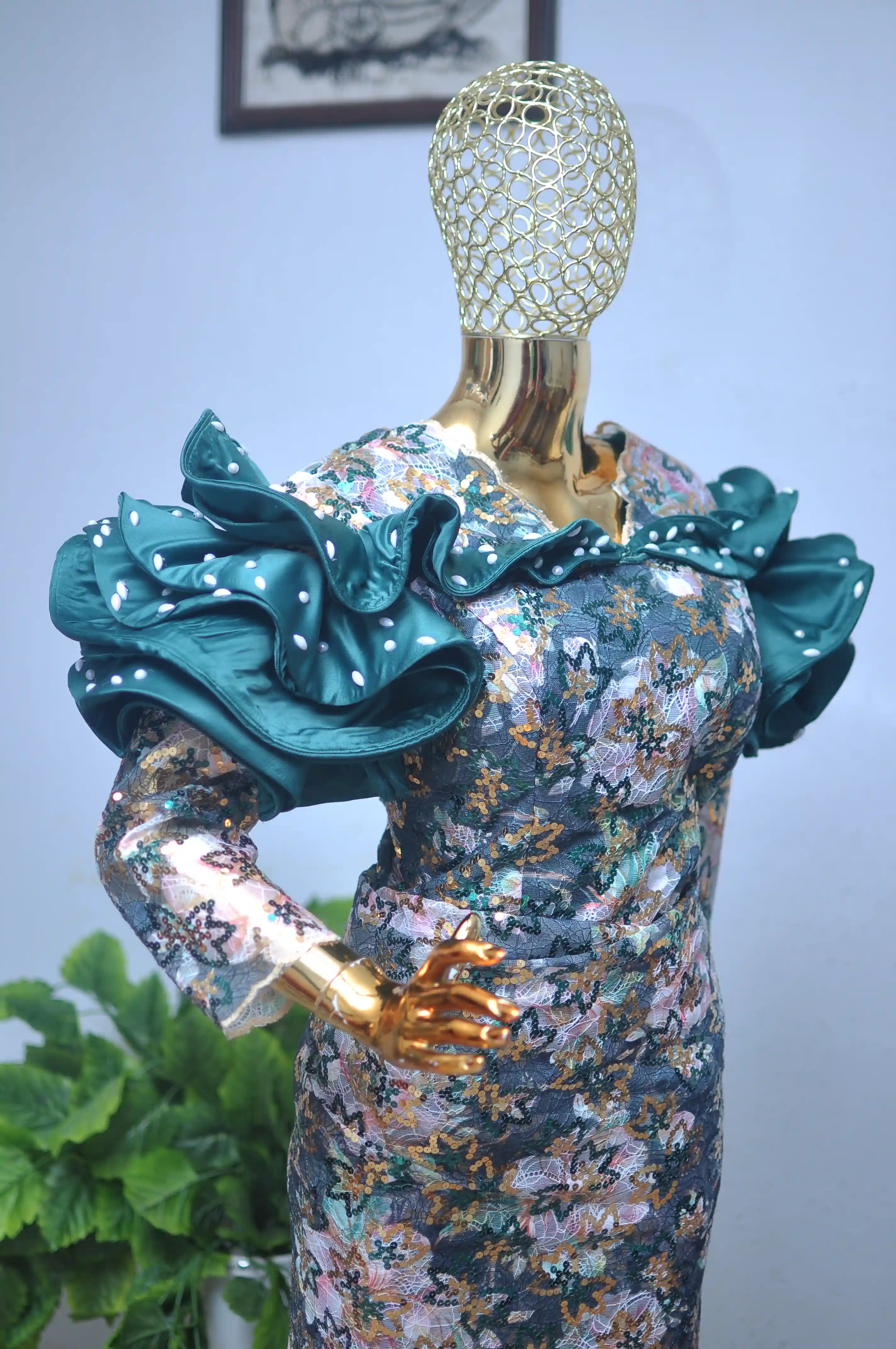
A statement detail, like this ruffled shoulder, can carry a design even when the rest of the dress stays quiet.
4. Use more than one reference picture—but give each one a purpose
You don't have to limit yourself to a single reference picture.
In fact, a few carefully selected images can communicate your preferences more clearly than one picture that doesn't quite capture what you have in mind.
The trick is to know what each picture is helping you explain.
One might communicate the neckline you prefer. Another could show the kind of sleeve you're drawn to. A third might help you describe the shape or movement you want from the skirt.
When you share the pictures with your designer, explain why you've selected each one.
For example:
"I like the sleeves in the first picture because they have volume, but I don't want them quite as large. The second picture has a neckline I prefer. For the skirt, I'd like something closer to the third picture, with a cleaner line."
That gives your designer a direction to explore, rather than several pictures that appear to be competing with one another.
It is also worth identifying your priorities. If the sleeve detail is the main reason you're drawn to a particular reference, say so. That helps distinguish the details you consider essential from the ones you're happy to reconsider.
You don't need to solve every design question before your consultation. The point is to communicate what you know so far and leave room to work through the rest together.
5. Remember that a reference picture doesn't tell the whole story
A photograph shows you a particular result, but it doesn't always explain how that result was achieved.
You may see a dramatic sleeve without knowing how it is structured. You can see how a skirt falls, but the photograph may not tell you how much the fabric contributes to that effect. Lighting, posing, styling and the angle of the photograph can also influence how a dress appears.
This matters when you're translating inspiration into a garment.
A feature that looks soft and fluid in one picture may depend on the fabric used. A structured detail may need a different construction approach. A silhouette may need to be adjusted to work with the fabric, the intended fit and the overall design.
That doesn't make the reference picture less useful. It simply means there is more to consider than what you can see in the photograph.
This is where the designer's role becomes important: to help interpret the idea, consider how the details work together, and develop a design that can be made into a real garment.
Sometimes that means keeping a feature close to the reference. Sometimes it means adapting it. And sometimes, after discussing the idea, you may decide that another approach will achieve the effect you want more successfully.
The aim is not to change your idea for the sake of changing it. It is to understand what you want the design to achieve and work towards that result.
6. Think about the fabric alongside the picture
Have you ever saved a dress because of the way its skirt falls, only to realise that what you love most may actually be the fabric?
The material can have a considerable influence on the finished look.
A fabric that holds its shape can create a different effect from one that drapes softly. The same design idea may look quite different when made in another material.
So, when reviewing your references, notice the fabric as well as the silhouette.
Does the dress appear structured or fluid? Does it have a soft sheen, a textured surface, lace, embellishment or layers? Are you drawn to the shape of the garment, the way the material behaves, or both?
If you already have fabric you want to use, mention that during your consultation. It may influence which elements of your reference pictures are practical to explore and how the design should develop.
You don't need to know the exact fabric in a Pinterest photograph. Simply describing the effect you like can help start the conversation.
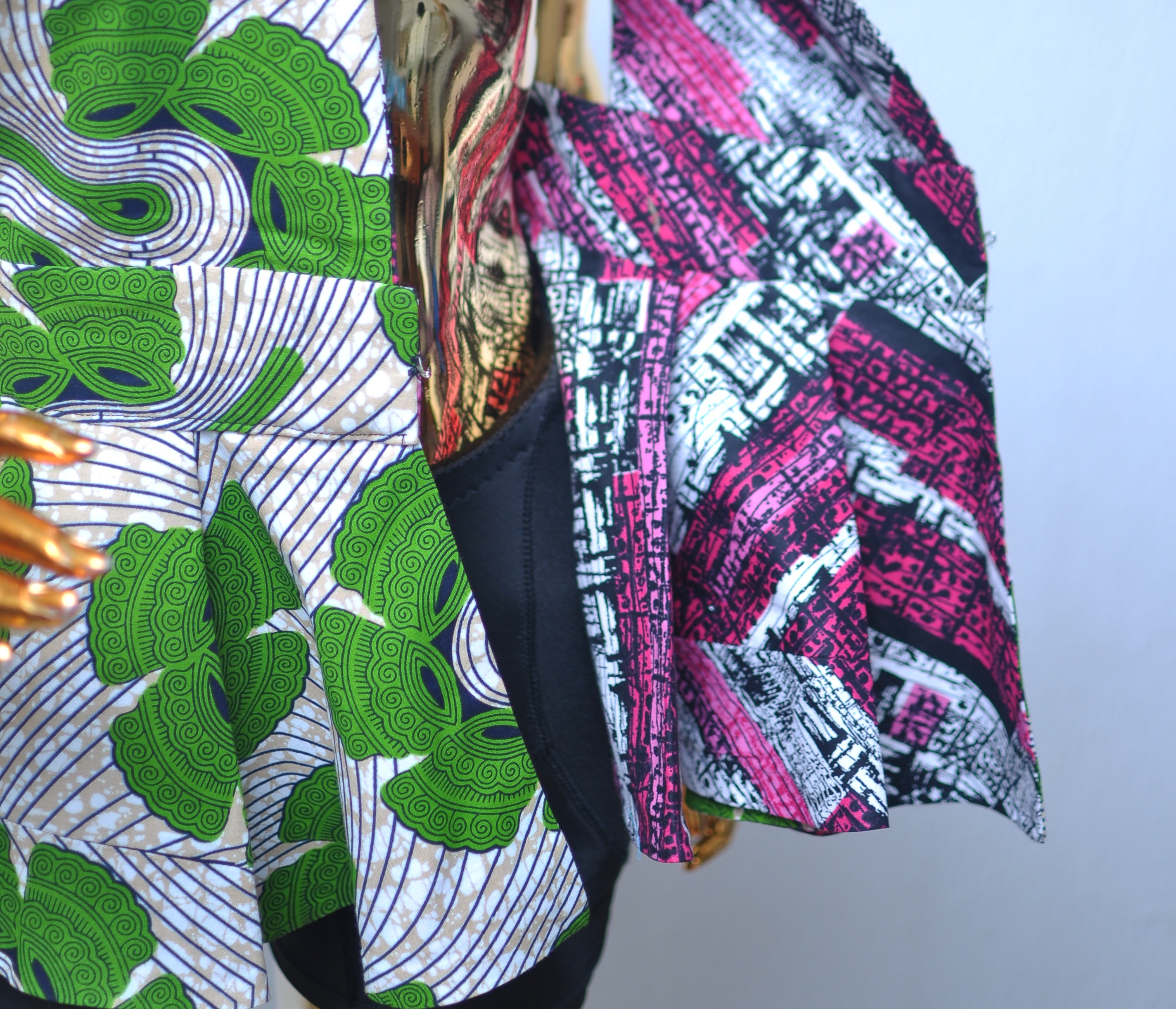
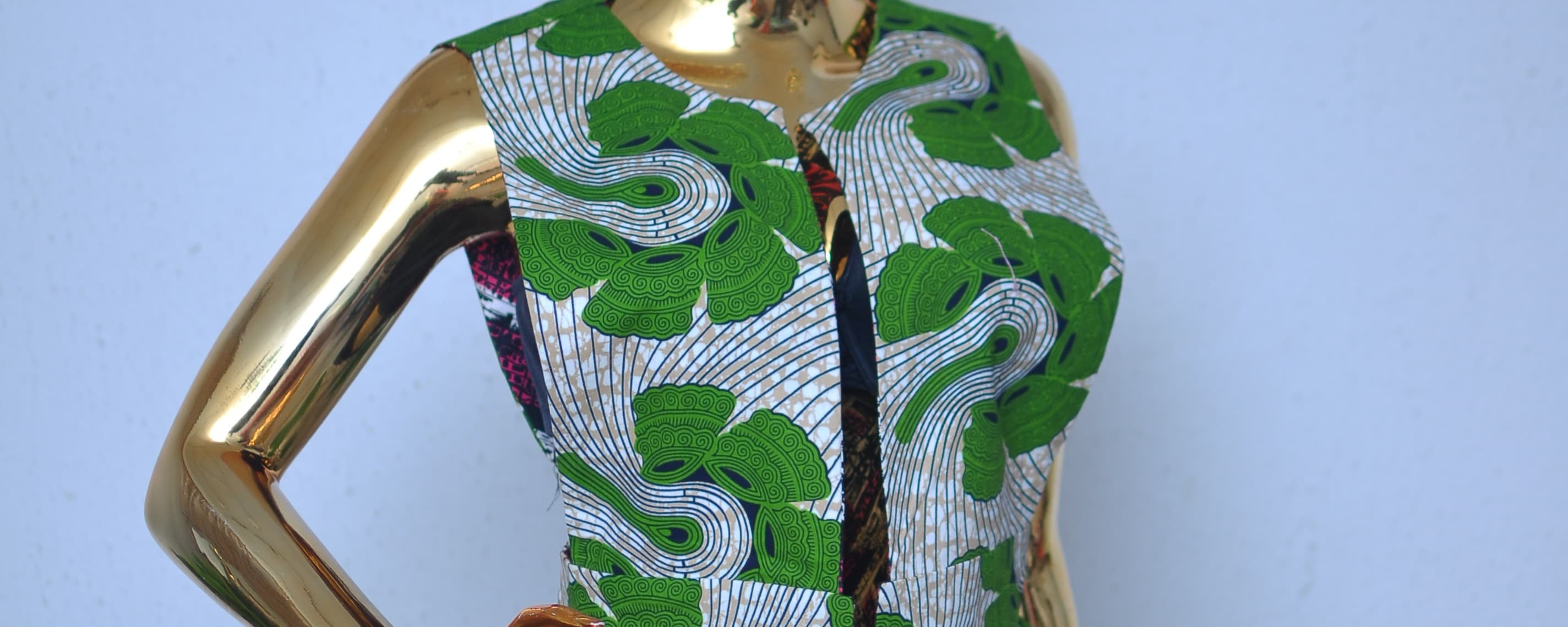
The same design idea can read very differently depending on the fabric — this reversible jacket shows two prints at once.
7. Tell your designer what you don't want, too
Sometimes it is easier to explain what doesn't feel right than to describe exactly what you want.
You might know that you don't want a very busy dress. Perhaps you prefer not to have excessive embellishment, or you don't want sleeves that restrict movement. You may like a fitted silhouette but dislike the feeling of a garment being too restrictive.
These preferences deserve a place in the conversation.
A designer can use them to narrow the possibilities and avoid spending time exploring directions that don't suit you.
It helps to distinguish between a detail you dislike entirely and one you would consider if it were approached differently.
For example, you might not want large sleeves, or you might simply prefer them to be softer and less pronounced. Those are different instructions, and the distinction can change the design direction.
You don't need to arrive with a long list of restrictions. Even two or three clear preferences can make a consultation more productive.
8. Bring your references into the consultation
Once you've reviewed your pictures, identified the details you like and thought about what you would change, you're ready to have a more focused conversation with your designer.
At Mizright, consultations take place virtually through WhatsApp or Google Meet. You can share your reference pictures, explain your preferences and discuss the direction you'd like to explore.
You don't need to arrive with a finished design. You also don't need to combine every detail yourself before the conversation begins.
Start with what you know:
- The occasion you're dressing for and the date.
- The pictures or details that have caught your attention.
- The features you would most like to include.
- Anything you would prefer to change or avoid.
- Whether you already have fabric or need to discuss fabric choices.
From there, you and your designer can work through the ideas and consider how they might come together in a dress suited to your preferences.
If you'd like to understand the wider process before getting started, read What to Expect When You Commission a Bespoke Dress in Nigeria and explore the Mizright How It Works guide.
Your Pinterest board is the beginning, not the finished design
You can save fifty dresses and still be unsure what you want. Or you can save three pictures, understand exactly which details you love, and have a much clearer starting point.
The difference isn't the number of pictures. It is how well you understand and communicate the ideas behind them.
Use Pinterest to discover possibilities. Pay attention to the features you repeatedly admire. Separate the parts you love from the parts you would change, and give each reference picture a clear purpose.
You don't have to reproduce a dress exactly to use it as inspiration. Sometimes, one detail from a picture is all you need to begin exploring something that feels more personal.
Have a dress in mind? Let's talk about it.
At Mizright, the first step is a virtual consultation to discuss your ideas, preferences and the occasion you're dressing for.
The Mizright Journal shares practical guidance and design perspectives to help you make more considered decisions about bespoke clothing.