Commissioning
What to Expect When You Commission a Bespoke Dress in Nigeria
Popoola Mutiat
13 October 2026
You have a dress in mind.
Perhaps you've saved a few pictures on Pinterest. Perhaps you have a fabric you've been keeping for the right occasion. Or perhaps you know how you want to feel in the dress, but you haven't quite figured out what it should look like yet.
You start thinking about having it made, and then the questions come.
How do you explain what you want? Do you need to arrive with a finished design? How will the designer know your measurements if you aren't meeting in person? And how early should you begin if you need the dress for a particular date?
These are reasonable questions to have before commissioning a bespoke dress.
At Mizright, the process begins with a conversation. You don't have to arrive with every detail figured out. What matters is having an opportunity to talk through your ideas, the occasion, and what you want from the dress. From there, the design and making process can take shape.
Here's what you can expect.
1. It begins with a conversation about the dress
Before discussing fabric or measurements, it helps to understand what the dress needs to do for you.
Where will you wear it? What kind of occasion is it for? Are you drawn to a particular silhouette, neckline or sleeve? Do you prefer something understated, or would you like the dress to have a more distinctive presence?
Sometimes, you know the answers to these questions already. Other times, you might have several ideas that don't quite fit together yet.
That is part of the conversation.
At Mizright, consultations take place virtually through WhatsApp or Google Meet. You can share reference pictures, describe what you have in mind, and discuss the details that matter to you without needing to visit a physical studio.
You don't need a professional fashion vocabulary to explain yourself. A picture, a description of what you like about it, or even a list of things you would rather avoid can be a useful starting point.
For example, you might love the sleeves on one dress but prefer the neckline of another. You might like a fitted bodice but want a different skirt. Those preferences help clarify the direction of the design.
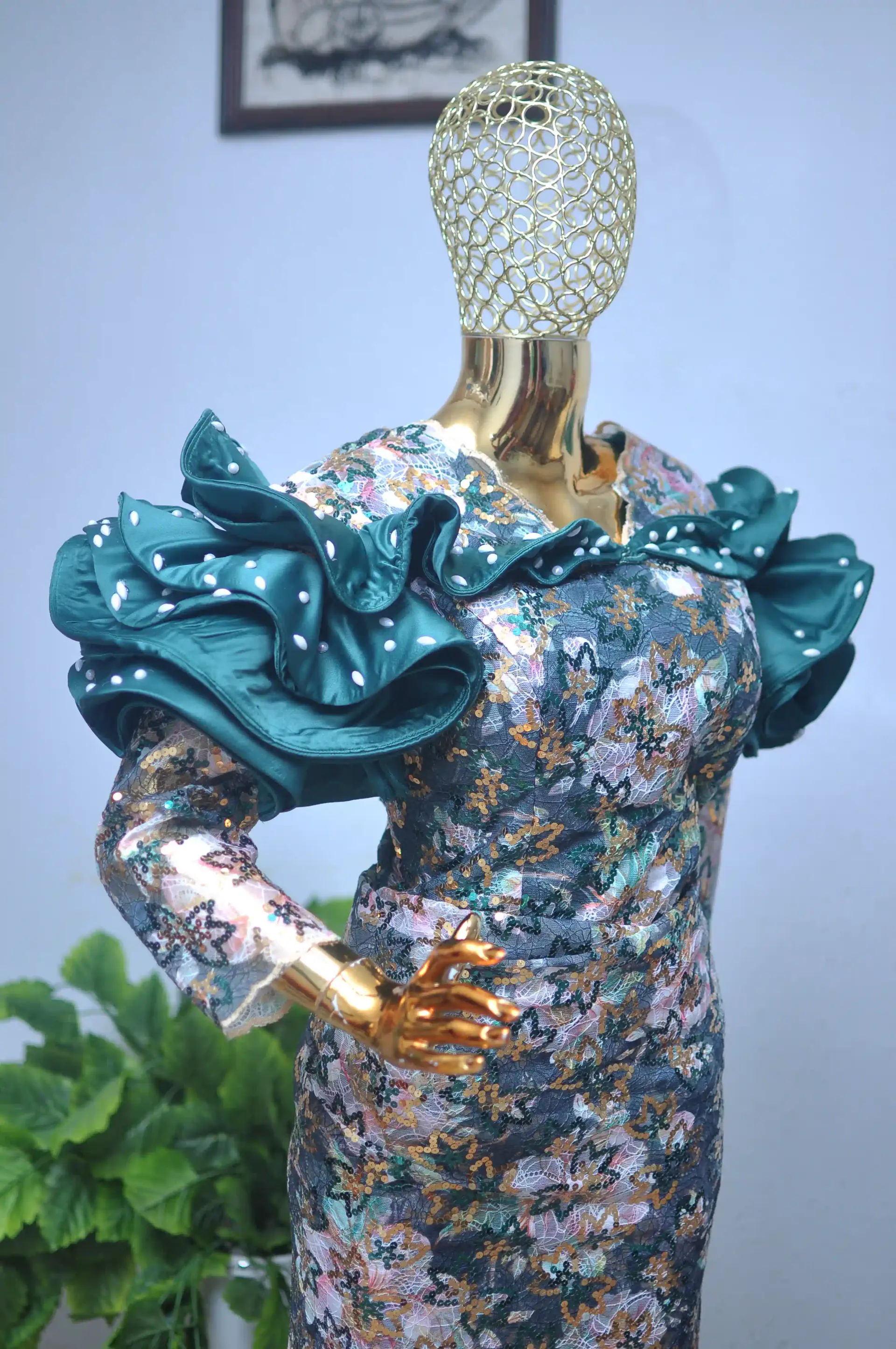
A finished Mizright commission — the kind of distinctive detail a first conversation might start from.
2. Your reference pictures help communicate the idea
If you have saved pictures of dresses you love, bring them into the conversation.
Reference pictures are useful because they give you and your designer something concrete to discuss. They can communicate a silhouette, a sleeve shape, a neckline, a fabric effect, or the overall feeling you want the dress to have.
But a reference picture doesn't have to become the exact dress you wear.
A design that looks beautiful in a photograph may use a fabric that behaves differently from the one you have in mind. A particular neckline or sleeve may need to be reconsidered when the design is adapted to your preferences and measurements. And sometimes, the part you love most about a picture is only one small detail.
This is why it helps to explain what you like about a reference, rather than simply sending a picture and asking for an identical result.
You could say, for instance, that you love the volume of the sleeves but want a simpler skirt. Or that you like the way the dress falls but would prefer a more covered neckline.
Those details give the designer room to develop a design around your preferences instead of treating the reference as a template to reproduce. If you're still collecting ideas, treat Pinterest the same way: save pictures for the one or two details you love rather than the whole look, and bring those into the conversation instead of asking for an exact copy.
3. The design takes shape around your preferences
Once the direction is clearer, the next step is working through the design itself.
This is where the conversation becomes more specific. The silhouette, proportions, sleeves, neckline, length and finishing details all need to work together. The design also needs to make sense for the fabric and the occasion.
You might begin with a fairly simple idea and discover that one carefully considered detail gives it the character you wanted. Or you might find that a feature you initially liked doesn't work as well with the rest of the design.
That doesn't mean the original idea was wrong. It means the design is being worked through.
Consider a dress with dramatic, sculptural sleeves and a long, relatively simple skirt. The sleeves may be the first thing people notice, but their size, structure and relationship to the bodice will influence the entire look. The skirt needs to complement that detail rather than compete with it.
The finished design is the result of those decisions working together.
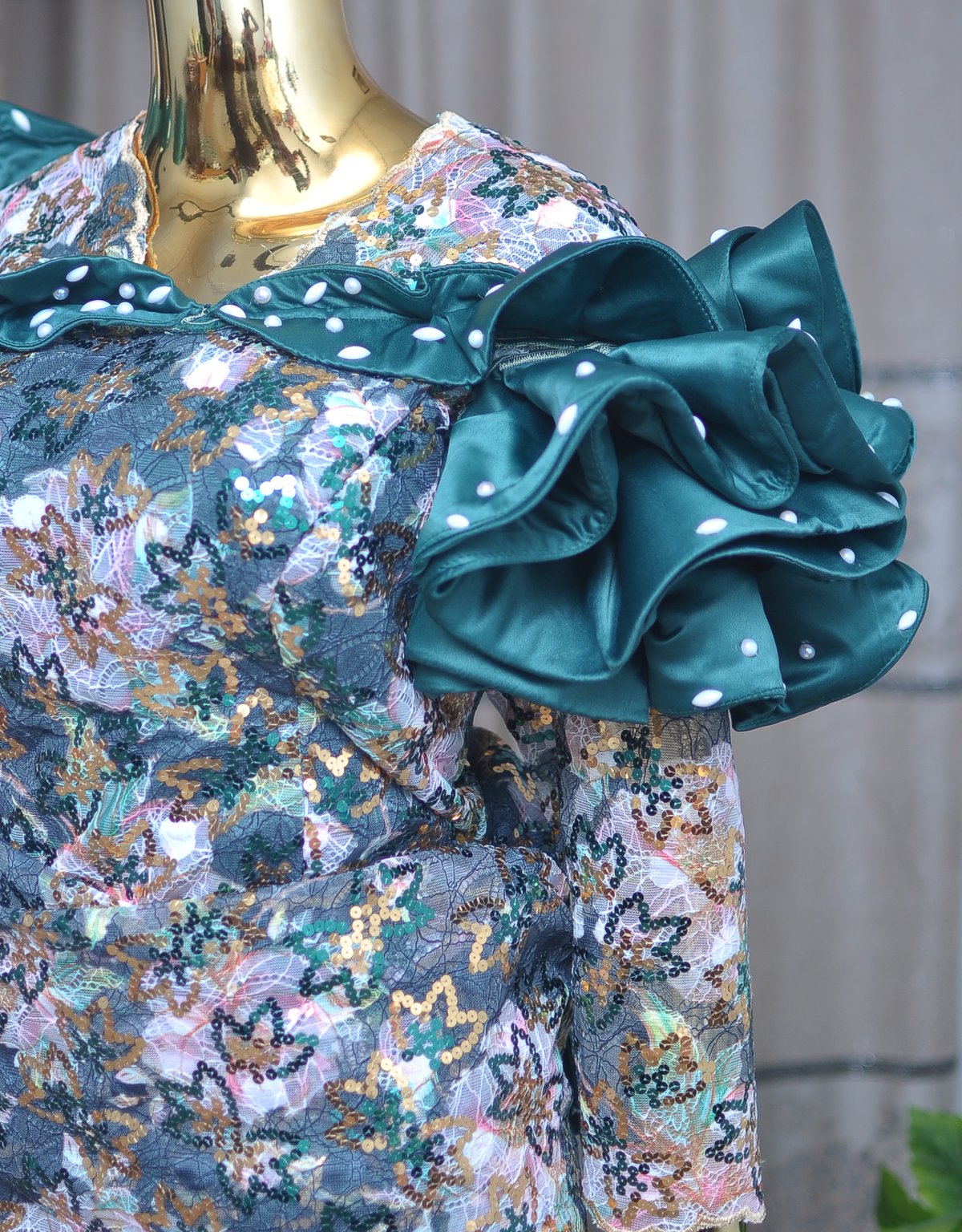
The same design from the side — proportion and structure matter as much as the view from the front.
4. Fabric is part of the design decision
Fabric is not simply the material used to bring a finished idea to life. It influences how the dress looks, falls and moves.
Two fabrics in a similar colour can produce very different results. One may hold a structured shape, while another may drape softly around the body. Some fabrics work beautifully for gathered or sculptural details; others are better suited to a cleaner, more fluid silhouette.
This is why the choice of fabric needs to make sense for the design.
If you already have fabric you want to use, let your designer know during the consultation. Its characteristics can help inform what is possible and which design details will work best.
If you haven't chosen your fabric yet, you can discuss the kind of finish and overall effect you're looking for. The important thing is to consider the material alongside the design, not as an entirely separate decision.
The same principle applies when you have a particular fabric in mind because it is sentimental, was given to you as a gift, or has been saved for a special occasion. The conversation becomes about how to make that fabric work for the dress you want.
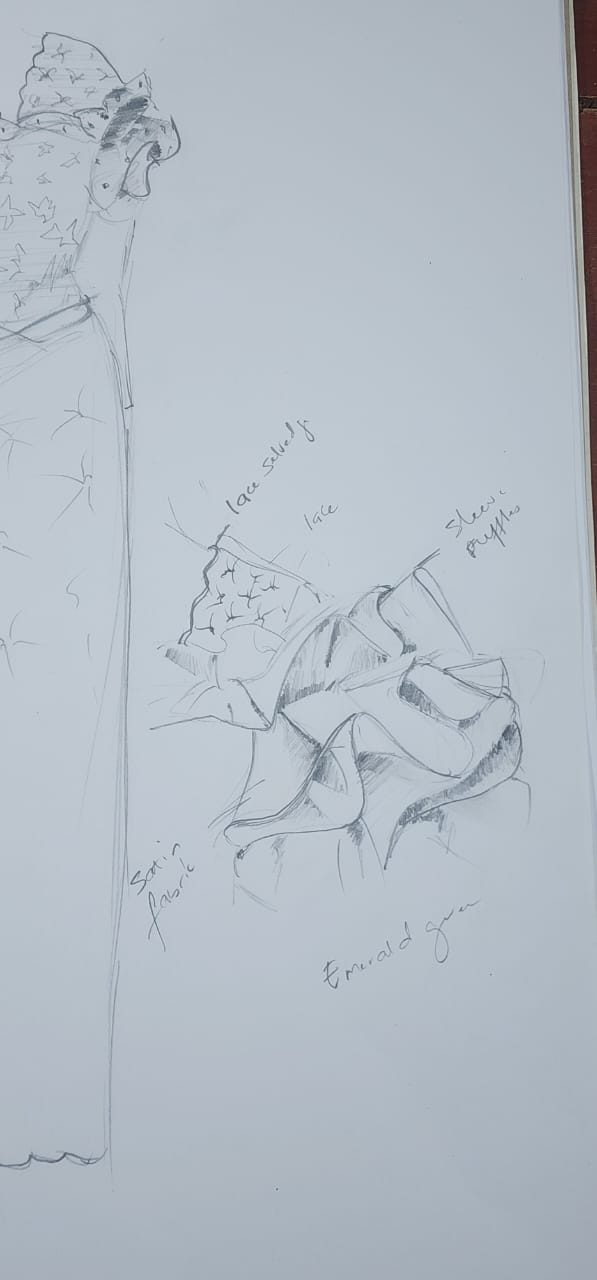
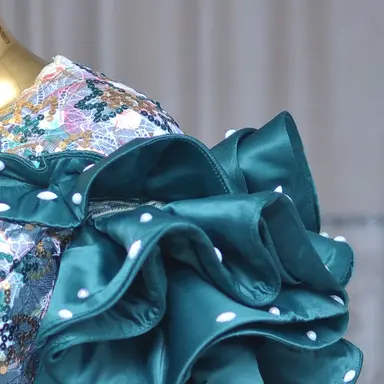
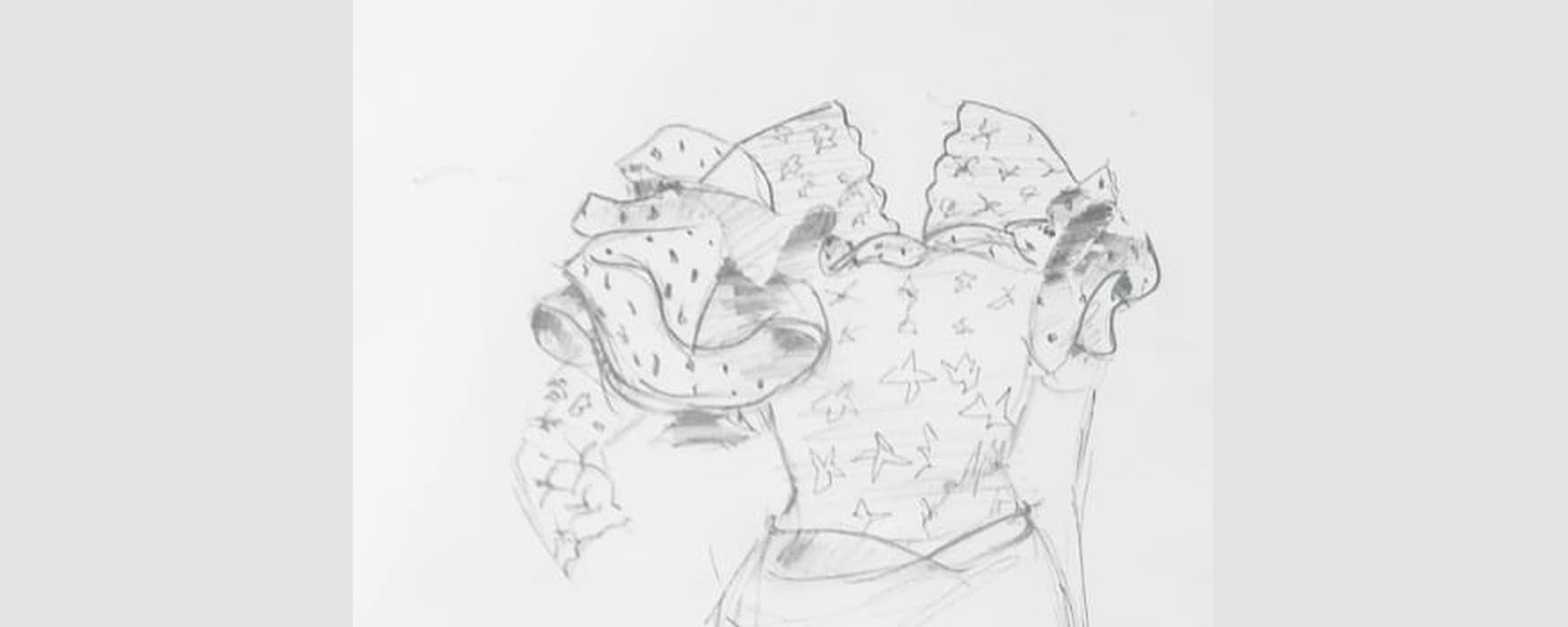
The ruffle sleeve sketch alongside the finished satin and pearl detail it became.
5. Measurements help the dress become yours
A bespoke dress is made around your measurements rather than selected from a standard ready-to-wear size.
Accurate measurements are therefore an important part of the process. They help guide the proportions and construction of the garment, although the measurements needed will depend on the design.
Because Mizright consultations are virtual, you can use our DIY measurement guide to take your measurements when required.
Take your time with this step. Follow the instructions carefully, use a flexible measuring tape, and ask for clarification if you are unsure about a measurement. It is better to check than to guess.
Measurements are one part of creating a dress that fits well. The design, fabric, construction and intended ease of movement also matter. A structured dress and a flowing dress, for example, may require different considerations.
The goal is not simply to reproduce a set of numbers in fabric. It is to use those measurements as part of making a garment suited to you and the design you've chosen.
6. The making process takes time
Once the design direction and essential details have been established, the work of making the dress can move forward.
Depending on the design, that work may involve preparing the pattern, cutting the fabric, constructing the garment, shaping its details and refining the finish.
Some dresses require relatively straightforward construction. Others involve more intricate sleeves, layered elements, embellishments or structural details that need additional attention.
That is one reason the time required can vary from one commission to another.
At Mizright, the typical timeline is 3–5 weeks, depending on the complexity of the dress. If you need the dress for a wedding, an owambe, a formal event or another important date, raise that date during your initial consultation.
Starting early gives you more room to discuss the design and plan the work without leaving everything until the last minute. It is best to confirm the timeline for your particular commission before proceeding.
7. The details matter as much as the overall design
When you look at a finished dress, you may notice the silhouette first. But the experience of wearing it is also shaped by smaller decisions.
How does the neckline sit? Do the sleeves feel right? Does the fabric fall as intended? Are the finishing details consistent with the design? Can you move comfortably in the garment?
These considerations are part of what makes bespoke dressmaking a process of working through a design, rather than simply sewing a picture into a dress.
The details will vary from one commission to another. A clean, minimal dress may depend on precise proportions and a neat finish. A more elaborate design may call for careful handling of layers, embellishments or sculptural elements.
Each dress has its own priorities.
And although a reference picture may provide the initial direction, the final garment needs to work as a complete design—not just look interesting in a photograph.
8. Plan for the occasion, not just the dress
When commissioning a dress for a particular event, it helps to think beyond the design itself.
Consider the date you need it, the nature of the occasion, the shoes or accessories you may wear with it, and how you want to feel throughout the event. If you will be sitting, walking, dancing or moving around a lot, those details may influence your design preferences.
You don't need to have every accessory chosen before beginning. But sharing the context helps your designer understand what you're dressing for and what matters most to you.
It is also worth leaving enough time for the agreed process. A dress needed in a few days presents very different constraints from one being planned several weeks ahead.
At Mizright, the typical making timeline is 3–5 weeks, depending on complexity. If your event is approaching, mention the date at the beginning so the feasibility of the commission can be discussed before you commit.
Before you begin: what should you prepare?
You don't need a complete design or a folder full of reference pictures to start a conversation. A few useful details are enough to help the discussion get moving.
It helps to have:
- The occasion and date. What are you dressing for, and when do you need the dress?
- Your initial ideas. These might be reference pictures, a description of a silhouette, or details you particularly like.
- Your preferences. Think about what you would love to include and anything you would rather avoid.
- Your fabric situation. Let the designer know if you already have fabric or would like to discuss your options.
- Questions about the process. If you're unsure about measurements, timing or how to communicate your ideas virtually, bring those questions along.
You can also explore the Mizright collections for ideas across Owambe, evening and occasion wear, and everyday or office styles.
These are starting points for a conversation, not a requirement to choose an existing design exactly as shown.
Is bespoke dressmaking right for you?
Commissioning a bespoke dress may be a good fit if you have a particular idea in mind, want to make considered choices about the design, or would like a garment made around your measurements and preferences.
It also asks you to participate in the process. You'll need to communicate what matters to you, make decisions about the design, and allow time for the work involved.
You don't have to know everything about fashion or dress construction. You simply need to be willing to have the conversation and work through the choices involved.
If you would like to understand the process in more detail, visit How It Works.
Let's talk about the dress you have in mind
You might already know exactly what you want. Or you might have a few saved pictures, a piece of fabric, and only a vague sense of the dress you're imagining.
Either is a place to begin.
At Mizright, the first step is a virtual consultation where we can talk through the occasion, your preferences and the direction you'd like to explore.